
Can Invisalign Fix a Bite Problem, or Just Straighten Crowded Teeth?
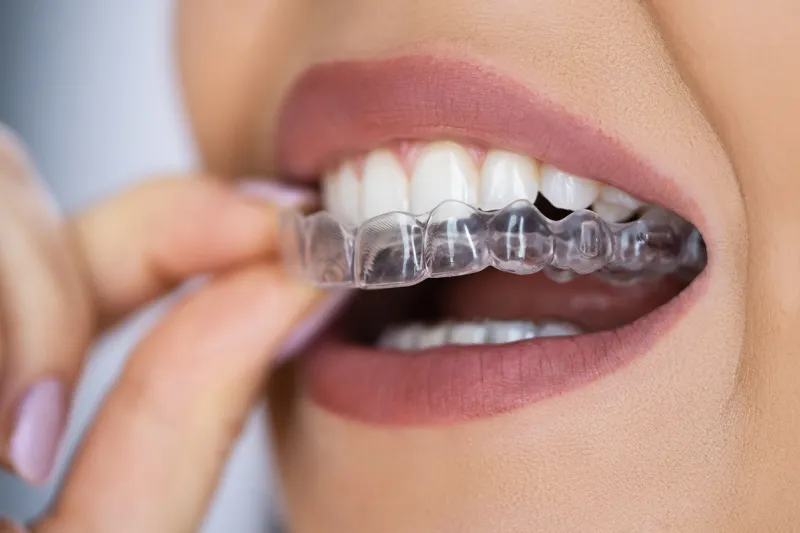
Invisalign is usually described in marketing materials as a way to get straighter teeth without metal braces, which leaves a lot of people with a reasonable but rarely answered question: does it actually fix a bite problem, like an overbite or a tooth that doesn’t line up correctly when the mouth closes, or is it really just for cosmetic crowding and gaps? The answer depends heavily on what kind of bite issue is involved, and understanding that distinction matters before assuming clear aligners will or won’t work for a given situation.
How Common Are Bite Problems, Really?
Bite irregularities aren’t rare. Data from a national health survey analyzing the U.S. population found that eight percent of people had a severe overbite of 6 millimeters or more, and posterior crossbite, where the back teeth don’t align correctly when biting down, affected close to ten percent of the population studied. Broader research on malocclusion, the general term for teeth or jaws that don’t align properly, has found that roughly half of people show some form of Class II malocclusion, commonly associated with an overbite, with a meaningful share of the population also affected by crossbite or underbite patterns. In short, some form of bite misalignment is closer to the norm than the exception, which is part of why “does Invisalign fix bite problems” is such a common question rather than a rare edge case.
What “Bite” Actually Refers To
It helps to separate two different things that often get lumped together. Crowding and spacing describe how individual teeth are positioned relative to each other within the same arch, whether they overlap, twist, or have gaps between them. Bite, or occlusion, describes how the upper and lower arches meet when the mouth closes. A person can have perfectly straight, evenly spaced teeth and still have a bite problem, because the two arches don’t come together correctly. The reverse is also true: someone can have significant crowding with a perfectly normal bite.
Invisalign was originally developed and marketed primarily around the first category, cosmetic alignment within an arch, which is part of where the “it’s just for straightening” assumption comes from. But modern Invisalign systems, using attachments (small tooth-colored bumps bonded to teeth) and specific aligner features designed for bite correction, are now used to treat a range of genuine bite issues as well, not just crowding.
What Invisalign Can Typically Address
For mild to moderate cases, current-generation clear aligners are commonly used to treat:
- Mild to moderate overbite, where the upper teeth excessively overlap the lower teeth
- Mild to moderate underbite, where the lower teeth sit in front of the upper teeth
- Anterior open bite, where the front teeth don’t touch when the back teeth are together
- Mild crossbite, particularly involving a small number of teeth
Treatment for these bite issues generally relies on more than just the aligner trays themselves. Attachments, specific aligner geometry designed to apply rotational or vertical force, and sometimes auxiliary devices worn alongside the aligners are what actually generate the kind of movement needed to correct a bite, rather than just repositioning individual teeth within an otherwise unchanged bite relationship.
Where Invisalign Typically Isn’t the Right Tool
More significant bite discrepancies are a different situation entirely. Severe overbites or underbites, cases involving jaw-size mismatches rather than just tooth position, and bite problems that stem from skeletal rather than purely dental causes usually require either traditional braces, which can apply more direct and sustained force through fixed brackets and wires, or in more extreme cases, a combination of orthodontics and jaw surgery. Clear aligners move teeth through the bone using a series of small, incremental shifts, which works well for many dental-only misalignments but has real limits when the underlying issue involves the jawbone itself rather than tooth position.
This is one of the most common reasons a case that looks straightforward on the surface, like a visibly overlapping bite, may not actually be a good aligner candidate once a dentist evaluates whether the root cause is dental or skeletal.
Why an Evaluation Matters More Than the Marketing
Because “Invisalign fixes bites” and “Invisalign is just cosmetic” are both partially true and partially misleading, the only reliable way to know which category a specific case falls into is a proper evaluation, including a look at how the jaws relate to each other, not just how the teeth are individually positioned. A resource like the Invisalign in Clairemont overview from Bayside Dentistry walks through how a treatment plan is actually built around a patient’s specific alignment and bite goals, which reflects how varied real Invisalign cases are compared to a generic “straighter teeth” pitch.
The Bottom Line
Invisalign isn’t purely cosmetic, but it also isn’t a universal fix for every bite problem. For mild to moderate dental bite issues, particularly ones that don’t involve a skeletal jaw discrepancy, modern aligner systems with attachments can produce real functional improvement, not just a straighter-looking smile. For more severe or skeletally driven bite problems, traditional braces or a combined orthodontic-surgical approach usually remain the more effective option. The determining factor isn’t how the case looks in the mirror, it’s what an actual clinical evaluation finds once someone looks past the visible crowding to the underlying bite relationship.