
What to Expect From Industrial Material Handling Solutions
Managing the flow of materials through a facility sounds simple on paper. In practice, however, industrial material handling in Australia spans a wide range of systems and processes. These include bulk conveyor systems, automated loading equipment, lifting gear, and even purpose-built storage setups.
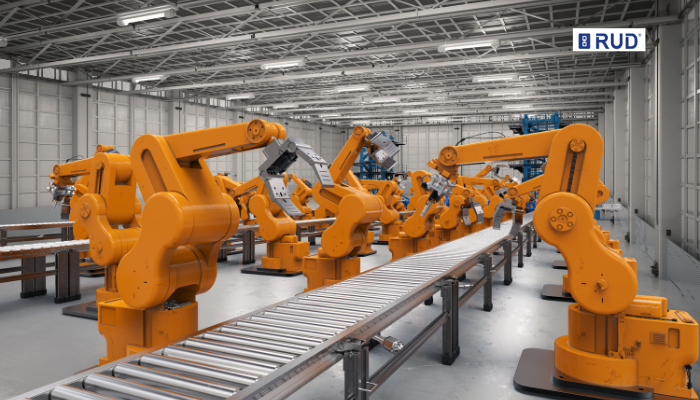
Our RUD Engineering team has worked alongside Australian facilities long enough to know where the real pressure points are. And more often than not, inefficient material movement is what drains margins, strains workers, and puts safety records at risk.
This article covers what these systems actually involve, how they’re applied at sites across the country, and what to look for when weighing up your options.
By the end, you’ll know exactly where to focus your attention.
What Are Industrial Material Handling Solutions?
Industrial material handling covers every system used to move, store, and control materials in a facility. It’s basically the backbone of how manufacturing plants, warehouses, and engineering operations function day to day.
It pulls together equipment like conveyors, hoists, bucket elevators, and automated guided vehicles into one connected workflow. In Australian manufacturing alone, that combination of equipment covers everything from raw material intake to final product dispatch.
That said, no two facilities are identical. So, the best combination of services and automation depends entirely on what your site handles, how much of it moves daily, and where the bottlenecks currently sit.
Now, let’s look at how bulk handling systems and automation fit into that picture.
Bulk Handling Systems and Automation Solutions in Australia
The main advantage of combining bulk handling equipment with automation is that your facility keeps moving at full capacity with far less hands-on labour.
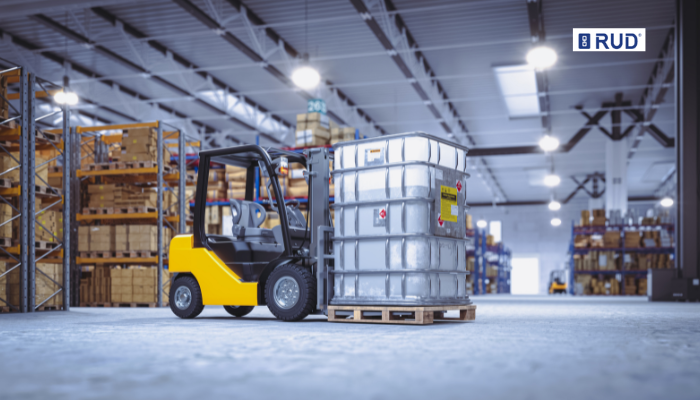
Here’s how each side of that equation works.
How Bulk Handling Systems Move Materials at Scale
Bulk handling systems move large volumes of loose materials continuously using conveyors, bucket elevators, and drag chain feeders. They’re built to carry everything from mineral ore and grain bags to industrial waste, and they do it efficiently over long distances.
Facilities that invest in these setups early tend to avoid the bottlenecks that slow down loading and dispatch cycles.
Industrial Automation in Australia: What It Looks Like in Practice
Most site managers in Australia are sitting on workflow inefficiencies that automation could fix in a few hours. They often assume automation solutions require a full system overhaul, when most operations only need targeted upgrades in specific areas.
Drawing from our experience, integrating these upgrades into an existing factory configuration doesn’t always mean starting from scratch. Your current infrastructure can support speed improvements within weeks, and manual error rates drop along with it.
What’s more, sensor-guided equipment and programmable conveyors improve throughput and accuracy without disrupting what’s already working. For most sites, that’s exactly what targeted automation does.
Lifting Equipment vs. Manual Handling: Which One Fits Your Site?
Lifting equipment handles what operators physically can’t, while manual handling covers lighter, less frequent tasks (a single wrong call here can set your whole workflow back by weeks).
Most facilities use both, but knowing where one ends and the other begins is what keeps your team safe and your output steady.
- Lifting Equipment: This covers chain hoists, lifting points, and crane systems built to move loads beyond safe human capacity. That’s why workshop floors and heavy manufacturing facilities rely on this equipment daily to keep operations running safely.
- Manual Handling: Workers physically moving, carrying, or supporting loads without mechanical assistance count as manual handling. It suits lighter tasks well, but sites that lean on it too heavily put their teams at risk of cumulative injury over time.
- Choosing the Best Support: Load weight, movement frequency, and your site’s safety obligations all guide this decision. Installing the wrong setup puts operators in positions they shouldn’t be in.
From what we’ve seen throughout local industrial sites, the balance of lifting equipment and manual handling looks different for every operation. RUD Australia‘s chain systems and lifting gear are built to suit those specific requirements, from single workshop floors to full-scale manufacturing sites.
Once that balance is in place, workplace safety and industrial robotics become the next conversation worth having.
Workplace Safety and Industrial Robotics: What You Need to Know
Most robotic systems today are designed in line with standards like ISO 10218 and AS 4024. These cover how industrial robots operate safely around workers. That’s made it far more practical for Australian businesses in manufacturing, warehousing, and processing to bring automation in without compromising safety.
The numbers back that up. Safe Work Australia identifies body stressing as the leading cause of serious workers’ compensation claims recorded nationally. Unfortunately, physical strain injuries aren’t always obvious. Sustained awkward postures and repetitive arm movements build up over time. And by the time managers notice, someone’s already been hurt.
Industrial robots can take over many of those tasks directly. These systems can:
- Maintain consistent output across long production runs
- Reduce reliance on repetitive physical processes
- Support productivity improvements throughout your facility
- Take on physically demanding work that puts workers at risk
For local operations with growing safety obligations, that’s a practical step toward a lower-risk working environment. Done right, it also gives your team the capacity to focus on work that actually needs human input.
Can Smarter Floor Space Use Improve Your Operations?
Yes, and facilities that plan their floor space well consistently move more product with fewer delays and less wasted movement.
The table below shows how different layout approaches stack up:
| Layout Approach | Primary Benefit |
| Vertical storage systems | Free up ground-level floor space for active workflows |
| Compact conveyor layouts | Reduce travel distance between processing points |
| Zoned work areas | Separate high-traffic zones to improve safety and efficiency |
| Modular equipment setups | Allow facilities to reconfigure as project demands change |
At the end of the day, every square metre you put to better use creates room to invest in improved workflow, more equipment, or faster throughput.
So if you’re looking to improve productivity without expanding your building footprint, well-planned floor space use is often the first place to start.
Your Next Step Starts Here
A solid material handling setup goes beyond equipment selection. Load requirements, site conditions, and day-to-day demands all determine what works on the ground.
RUD Australia works with clients across mining, logistics, manufacturing, and the recycling industry to deliver systems and services built around specific site demands. Our company has spent decades helping local businesses rely less on guesswork and more on proven engineering.
If you’re ready to assess your facility’s handling setup, contact our team today. We’re here to help you move forward with confidence.